The Boundary Is the Message: Aligning UK Search Coverage with Real Service Areas
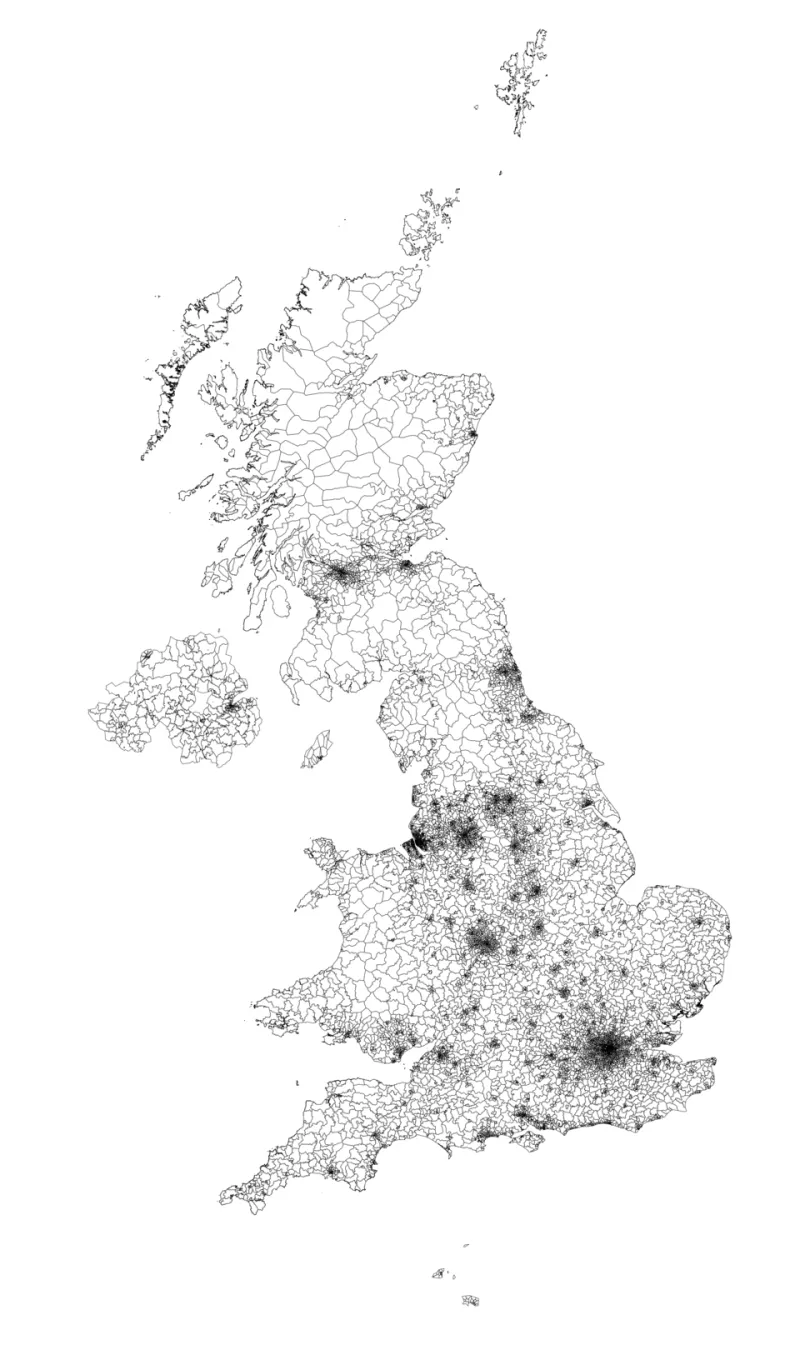
Photo: Anameofmyveryown, CC BY-SA 3.0, via Wikimedia Commons
UK service businesses often inherit a search presence that is broader than their operational reach. A firm may rank for town names it has never served, publish location pages assembled from templates, or rely on a vague promise of national coverage. The result is rarely a neutral surplus of visibility. It produces wasted enquiries, distorted conversion data and, at times, a credibility problem when a prospective customer discovers that the advertised service area was aspirational rather than actual.
A coverage audit is therefore not a geographical nicety. It is a relevance control. The aim is to make the boundary between demand and delivery explicit, then align pages, forms and statements with that boundary in language that both customers and search systems can understand.
Begin with evidence, not ambition
The first step is to separate what search results suggest from what the business actually does. Export query data from Search Console and look for place names, county terms, postcode fragments and phrases such as 'near me'. Where available, use analytics location reports to see the towns and regions from which sessions originate. This gives a demand-side view: where people are searching from, or where they appear to be searching for.
On the delivery side, use the operational record. For many UK service firms, the most useful unit is the postcode district or outward code, such as SW1, M1 or BS3. Completed jobs, booked appointments, delivery records or CRM entries can be aggregated at this level. If the business works across a radius, note the practical travel time rather than the straight-line distance. If it works through partners or subcontractors, record that too.
Build a four-bucket comparison
Once both lists exist, place each location into one of four groups. The categories are deliberately simple, because the purpose is to prompt decisions rather than produce an elaborate model.
- Served and visible. The business covers the area and appears in relevant search results. These locations merit reinforcement: accurate location pages, local proof and clear response expectations.
- Served but invisible. The business has delivered work or can genuinely reach the area, but search visibility is weak. These are candidates for content improvement, internal linking or local proof, not necessarily for new pages.
- Visible but unserved. The business attracts attention in an area it cannot reasonably serve. This is the most commercially sensitive group. It may require page edits, form controls or paid-search exclusions.
- Neither served nor visible. No immediate action is needed unless the business intends to expand. In that case, expansion should be treated as an operational decision first and a search decision second.
The fourth group is a useful discipline. It prevents teams from creating pages simply because a keyword tool shows demand. Demand without delivery capacity is not a market; it is a mismatch.
Audit the town pages that overreach
Location pages are the most common place where coverage claims drift. A page may name a town, use a generic photograph and list services, yet contain no evidence that the firm has any presence or practical route to the area. For customers, this can feel like a doorway rather than a service. For search engines, it adds little that is distinctive.
Review each location page against a short set of questions. Does the page state where the service is delivered from? Does it explain travel or response arrangements? Is there named local proof, such as a project example, a partner address or a service note? Does the page avoid implying a shopfront or office that does not exist? If the answer to these questions is consistently no, the page should be revised, consolidated or removed. Redirection to a broader coverage page is often better than leaving a thin town page to compete on its own.
For areas that are genuinely served but do not have a local base, the page should say so plainly. A statement such as 'we serve [town] from our [base] team, with appointments typically available within [timeframe]' is more useful than an ambiguous local claim. It sets expectations and gives the page a reason to exist.
Make enquiry forms part of the boundary
Coverage clarity should not stop at the page. Enquiry forms are where mismatches become operational costs. A form that accepts any postcode without comment invites out-of-area requests that consume staff time and skew conversion reporting.
A postcode field placed early in the form can do more than route enquiries. It can carry helper text that states the core service area and explains what happens outside it. For firms with complex coverage, a simple validation rule or an automated acknowledgement can set expectations without rejecting potentially valuable work. The wording should be direct: 'We regularly serve [list of areas]. If your postcode is outside this area, we will confirm whether we can help before arranging a visit.'
This is not a barrier to enquiry. It is a qualification step. It also creates a useful data stream: the proportion of out-of-area enquiries becomes a coverage metric in its own right.
Replace 'nationwide' with a coverage statement
Vague national claims are common because they feel expansive and low-risk. In practice, 'nationwide' tells a customer very little and can invite searches from locations the business cannot serve economically. A better approach is a short coverage statement used consistently across the contact page, footer, location pages and relevant service pages.
The statement should name the core areas, describe the basis of coverage and explain how to check an address. For example: 'We provide [service] across [region] and selected postcode districts in [neighbouring region]. Work outside these areas is considered case by case.' This is more search-friendly than a boast because it contains specific place terms and a clear customer promise. It also gives internal teams a single source of truth for sales conversations and content updates.
Where structured data is used, keep it consistent with the visible statement. If a LocalBusiness or service-area configuration is in place, it should reflect real coverage rather than an idealised map. Misalignment between markup, page copy and operational reality undermines the value of the signal.
Turn the audit into a quarterly routine
Coverage changes. A firm may open a new base, withdraw from a region, take on subcontractors or change its response times. A quarterly review keeps search presence from drifting away from operations. Assign an owner, keep a simple log of location decisions and review the out-of-area enquiry rate alongside page-level performance.
As search results become more conversational in 2026, clarity about place will matter more, not less. AI-assisted answers tend to reward explicit, well-organised information. A business that states where it works, how it reaches customers and what happens beyond its boundary is easier to represent accurately.
The boundary is not a limitation to be hidden. It is part of the service promise. When UK firms align search coverage with postcode-level reality, they reduce wasted enquiries, improve the quality of local pages and give customers a clearer reason to trust the result.